In high-precision manufacturing, conventional infrared (1064nm) fiber lasers and far-infrared (10.6µm) CO2 lasers rely primarily on thermal energy to melt, boil, or vaporize surface material. While highly effective for heavy metals and dense organics, thermal energy creates a microscopic heat-affected zone (HAZ) that can cause discoloration, polymer blistering, micro-cracking, or structural warping on delicate and heat-sensitive substrates.
Ultraviolet (UV) laser marking machines operate at a specialized 355nm wavelength, utilizing third-harmonic generation (THG) from diode-pumped solid-state crystal oscillators. Because 355nm photons possess exceptionally high quantum energy, they sever chemical molecular bonds directly through a photochemical reaction known as cold marking or cold ablation. This process generates pristine, high-contrast marks with virtually zero thermal dissipation.
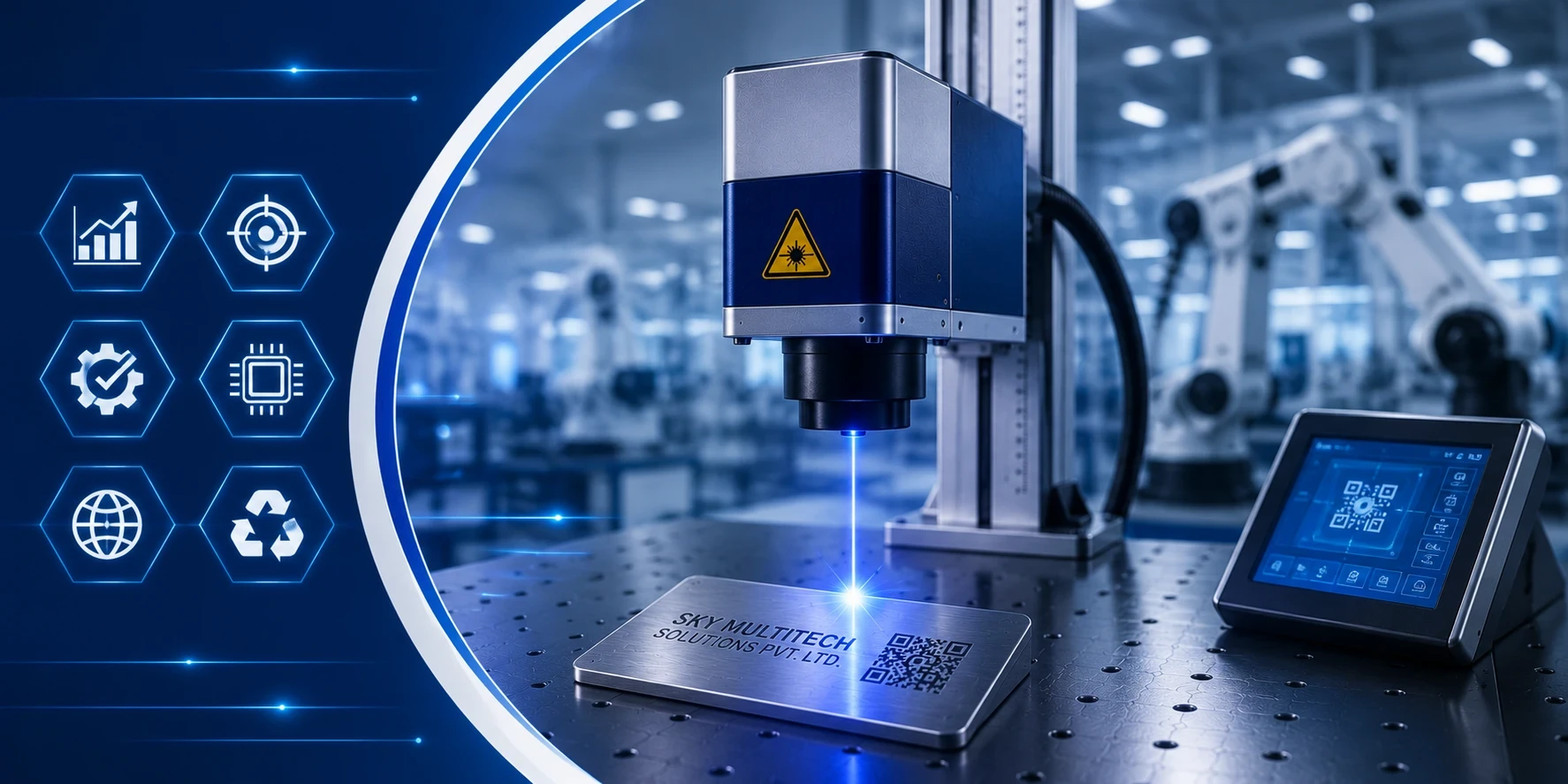
As premier Indian manufacturers of precision UV Laser Marking Machines, 10 Watt UV Laser Markers, and 3 Watt UV Laser Markers, Sky MultiTech Solutions Pvt. Ltd. explores the decisive advantages of cold UV marking across modern industries.
Because the photochemical ablation mechanism bypasses thermal melting, delicate substrates experience zero thermal distortion. This is critical when marking thin-wall polymers such as PTFE tubing, polyethylene film, and medical catheters where any thermal degradation would compromise pressure integrity or dimensional tolerances.
The 355nm ultraviolet wavelength offers extraordinarily high optical absorption rates across materials that reflect or transmit infrared light:
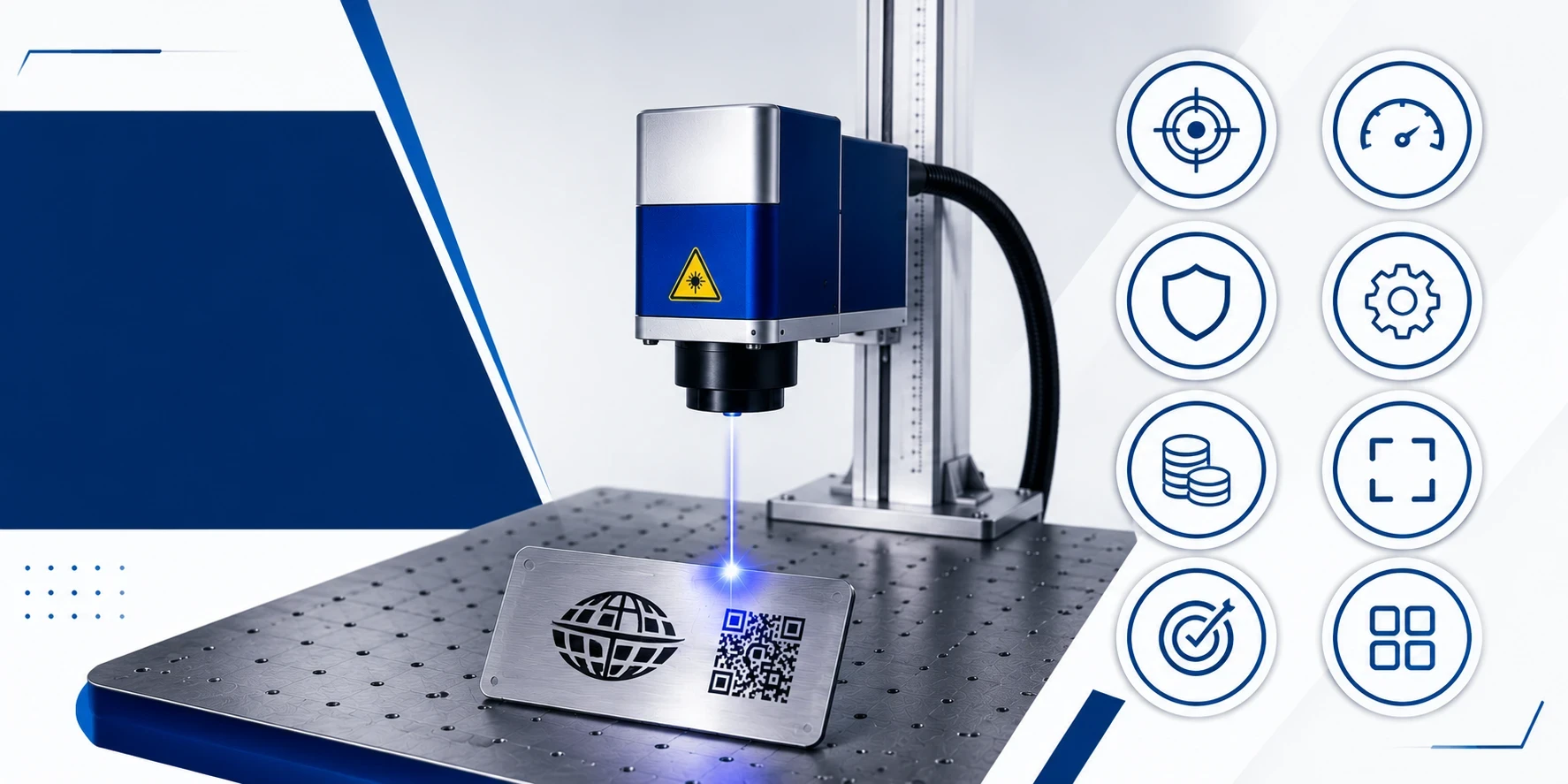
Due to the short 355nm wavelength, UV laser beams can be optically focused to spot diameters below 15 to 20 microns. This microscopic focal spot allows manufacturers to engrave crisp, machine-readable 2D matrix codes smaller than 0.5mm x 0.5mm, ideal for miniature electronics, medical implants, and high-security anti-counterfeiting applications.
For medical devices and surgical tools, UV cold marking leaves the surface microscopically smooth, eliminating rough crevices where pathogens can accumulate. Marks withstand repeated ultrasonic chemical cleanings and steam autoclave sterilization cycles without fading or oxidizing.
Whether you require high-speed on-the-fly expiration coding on pharmaceutical packaging or microscopic serial tracking on aerospace electronic assemblies, UV laser technology delivers unmatched precision, contrast, and quality.
At Sky MultiTech Solutions Pvt. Ltd., we provide comprehensive industrial UV laser marking solutions with on-site commissioning, dedicated operator training, and local spare parts inventory. Contact our engineering team at [email protected] or call +91-7290073759 to schedule a live demonstration or arrange complimentary sample marking on your production components.